
Across agricultural supply chains, smallholder farmers rise before sunrise, work long hours in the field, and sustain the global food system. Yet many continue to face food insecurity, limited dietary diversity, malnutrition, preventable health conditions, and inadequate support during critical life stages such as pregnancy and breastfeeding.
These challenges are not isolated. They influence household resilience, community wellbeing, and ultimately the strength and stability of agricultural supply chains. For organisations working across supply chains, including cooperatives, agribusinesses, buyers, and NGOs, this presents both a responsibility and an opportunity to support smallholder farmer nutrition.
Investing in smallholder farmer nutrition strengthens workforce productivity, reduces health-related disruptions, supports women’s participation, builds trust with farming communities, and reinforces sustainable sourcing commitments. Healthier farmers contribute to more reliable and resilient supply chains.
In response to this shared responsibility, we are proud to introduce the Smallholder Farmer Workforce Nutrition Guidebook Series – a practical set of four guidebooks designed to help organisations take structured, measurable action to strengthen nutrition and wellbeing across agricultural communities.
Each guidebook follows a clear, implementation-oriented structure:
– Understanding the evidence and business case
– Conducting a needs assessment
– Designing context-specific interventions
– Running programmes effectively
– Monitoring progress and learning
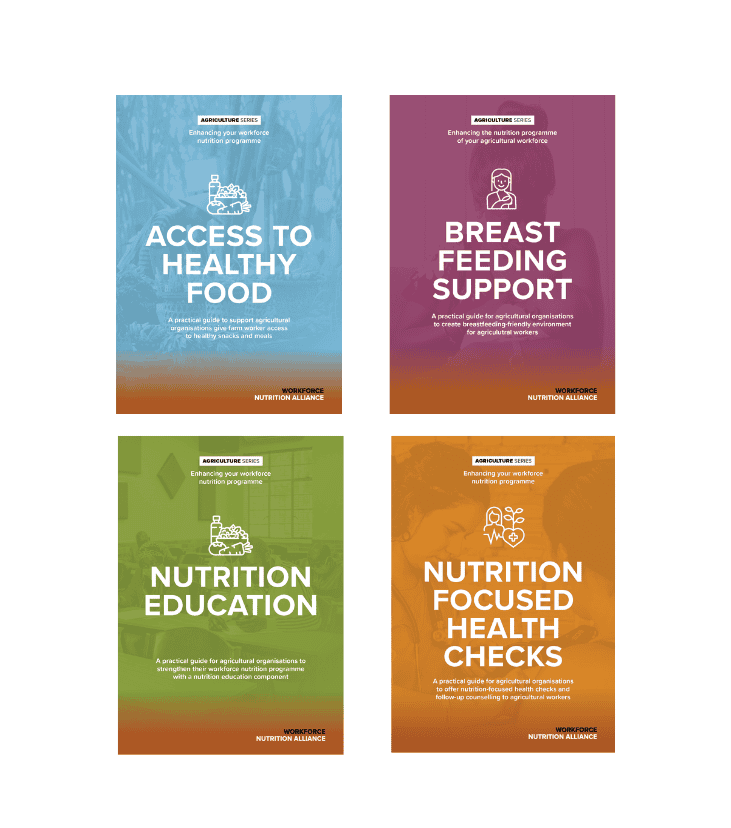
The Four Pillars of Workforce Nutrition for Smallholder Farmers
1. Access to Healthy Food: Smallholder farmers produce food, but often consume monotonous diets heavy in staples and low in diversity. This guidebook provides step-by-step strategies to improve access to safe, nutritious foods through:
– Healthy line shop models
– Home gardens and biofortified crops
– Door-to-door delivery
– Food voucher schemes
– Practical entry points within supply chains
By improving the availability and affordability of nutritious foods, organisations can enhance farmer wellbeing while strengthening local food systems and supply reliability.
2. Breastfeeding Support: In agricultural communities, mothers often return to farm work shortly after childbirth, with limited time, space, or social support to continue breastfeeding. This guide offers low-cost, realistic solutions to:
– Create breastfeeding-friendly environments
– Raise awareness among families and community leaders
– Integrate support into existing agricultural structures
Supporting breastfeeding is not only a health intervention, but it also reduces household health expenditures, supports women’s continued economic participation, and invests in the next generation of farming communities.
3. Nutrition Education: This guidebook helps organisations design nutrition education programmes that go beyond awareness and are grounded in behaviour change principles. It supports:
– Context-sensitive messaging
– Community-based engagement
– Integration with agricultural activities
– Practical behaviour changes communication strategies
4. Nutrition-Focused Health Checks: Many farmers live with undetected anaemia, high blood pressure, elevated blood sugar, or undernutrition conditions that quietly reduce productivity and wellbeing. This guidebook provides practical guidance to:
– Deliver simple, low-cost screenings
– Establish referral pathways
– Integrate counselling and follow-up
– Protect confidentiality and trust
Early detection reduces health-related work disruptions, improves long-term outcomes, and supports a healthier, more reliable farming base.
More than guidance — a pathway to scale
These four guidebooks complement the Smallholder Farmer Scorecard and support organisations to operationalise the four pillars of workforce nutrition in agricultural supply chains. They are publicly available and designed to be adaptable across geographies and contexts.
Supporting smallholder farmer nutrition is smart, strategic, and foundational towards making food systems more resilient. When farmers are healthier:
– Productivity improves
– Household resilience strengthens
– Women and children thrive
– Supply chains stabilise
– Sustainability commitments become real
The Smallholder Farmer Workforce Nutrition Guidebook Series offers practical tools to move from intention to implementation. Whether you are just beginning or looking to strengthen existing efforts, these guides are designed to help you take structured, measurable steps that fit the realities of agricultural settings. Download these guidebooks and take the next step toward nourishing the hands that feed the world.